The Shave Is Finished. Why Are You Still Thinking About Your Neck?
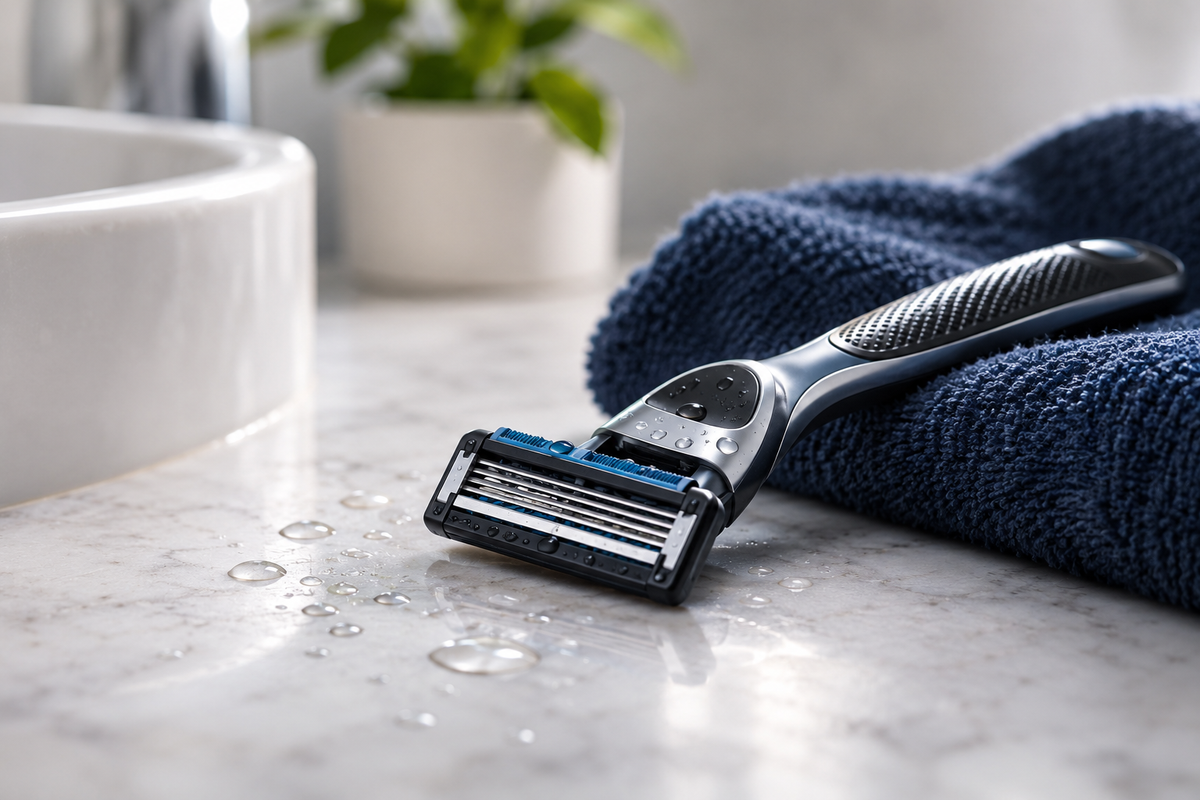
There's a moment after shaving when the sink is cleared and your day is supposed to start.
But your attention hasn't moved on.
You catch your neckline in a different light, and suddenly a small part of your routine is taking up far more room in your head than you wanted it to.
No one has to say anything. Sometimes wondering what someone might notice is enough.
So why can bumps appear after a close shave, and what can you actually do about them?
Not Every Post-Shave Bump Is the Same
Shaving can leave different kinds of bumps and marks, and they don't all have the same cause.
One possibility is pseudofolliculitis barbae (PFB), commonly called razor bumps. It can happen when a closely cut hair re-enters the skin or penetrates the wall of its follicle, provoking inflammation.
But other skin conditions can look similar. Not every red mark is PFB, and a photograph or article cannot diagnose it. Persistent, painful, spreading or otherwise concerning changes deserve professional advice.
One Way Razor Bumps Can Form
Sometimes, as a cut hair grows, its tip curves back toward the skin instead of growing freely outward.
That can set off an inflammatory reaction, particularly where hair is coarse or tightly curled.
 1 — A hair grows up and out of the skin.
 2 — Its tip curves back toward the skin.
 3 — It re-enters the skin, and inflammation can follow.
The Razor Isn't the Entire Routine
How you shave matters.
Shaving in the direction of hair growth, avoiding repeated close passes, and not stretching the skin are among the practical changes dermatologists recommend for razor bumps.
And then there's a different question: what belongs in your routine around hair removal?
Aftercare doesn't undo a close shave, and a cosmetic product shouldn't be mistaken for medical treatment. But caring for your skin between shaves can be a separate, deliberate part of your routine.
A Small Blue Roll-On, and What It Actually Is
For someone considering that part of their routine, Dermalaine offers a 50 mL body-care roll-on selected for use around hair removal.
It's the small blue bottle shown below.


What we can promise is honesty: we won't overstate what it does. You get exactly what's on the label, with its directions and precautions — and a real person to email if you need one.
Take a Look Before You Decide
See the actual roll-on, its ingredients, directions, precautions and current delivery and return information.
You can decide whether it belongs in your routine.